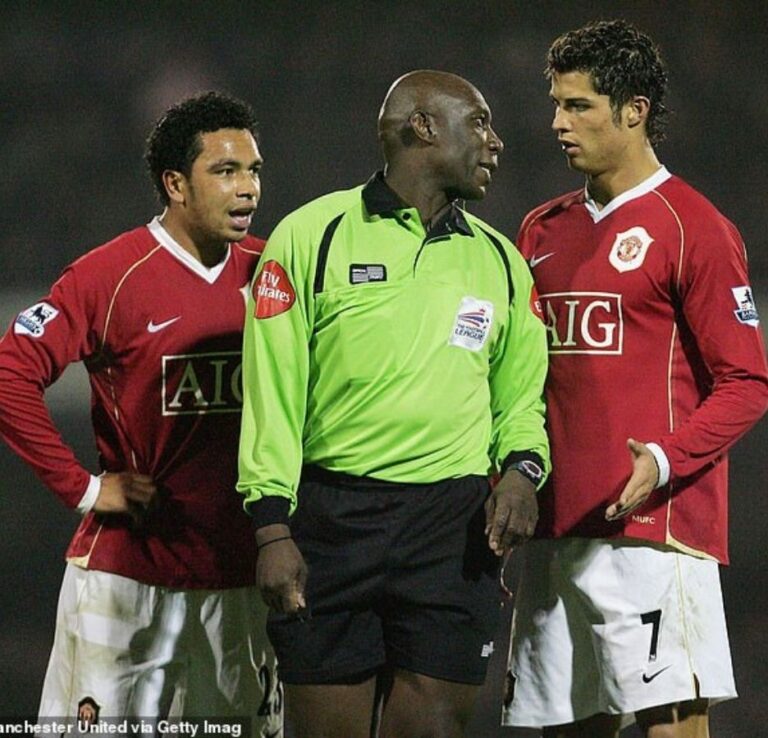
Uriah Rennie still remains the last black referee to officiate in the Premier League. The top-level English football referee retired thirteen years ago. If this fact does not highlight the need to improve diversity amongst match officials, then I do not know what will.
The Yorkshireman began refereeing in local leagues in 1979. He then officiated in the Northern Premier League until 1994. During this time, Uriah was added to the Football League list of referees. Three years later he took charge of his first Premier League game at Elland Road where Leeds United hosted Crystal Palace. The 61-year-old became a FIFA referee in 2002 before retiring at the age of 45 in 2004. However, Uriah made a return to active refereeing in 2007 before retiring for good a year later.
Uriah is now a part of the FA’s referees’ committee where he wants to improve “equality of opportunities.”
In the 2020/21 footballing season there were 79 referees on the national list of officials which included all top-flight and EFL officials. Not one of them were from a Bame background. Being the Premier League’s last black referee, in order to increase the diversity of officials, Uriah believes it is time “words are matched by action.”
With a statistic as appalling as that, it comes as no surprise that Uriah is frustrated with the lack of progress made since his retirement in 2008.
In an interview last year he said, “We need to ensure words are matched by action, so we see more people if different diversities in football. It shouldn’t be unusual to see a female referee or a black referee or someone with a disability.
“I want to break down the barriers to provide equality of opportunities to all of our disadvantaged groups, who at the moment don’t have the opportunity to achieve their potential.
“I want to make sure that people have at least the same opportunity that I supposedly had. But more importantly, that everybody has the same opportunity in the community so nobody is disproportionately affected purely because of who they are or the colour of their skin.”
In 2019 just 9.4% of referees at all level were Bame despite the FA setting a target in 2012 to reach 10% by 2016. This statistic supports the argument that the FA need to do more to encourage people from the Bame community to take up officiating.
Are people from Bame backgrounds less likely to take up refereeing due to the lack of role models?
Former black EFL referee, Phill Prosser, would say yes. The retired referee is now a Bame ambassador for the charity Ref Support.
He said, “When I was coming through the system, Uriah Rennie was at the top so I could see Uriah and think, ‘Well I can do that’. But if there are no role models at the top, it is difficult to see yourself at the top. If you see perceived barriers to progression, then that could be putting off some of the talent.
“If you think about the number of high-profile, talented black footballers in England, I cannot believe we haven’t got some very high-profile, talented black referees. We seem to be behind the drag curve in a refereeing sense.”
However, someone who has been recognised for aspiring officials from the Bame community, is experienced EFL assistant referee Akil Howson.
Akil is the highest-ranked Bame official in the EFL and has been officiating in the Championship since 2015. As a result, for being an inspirational figure to aspiring Bame officials, he won the 2019 Football Black List award.
Speaking at the 2019 event, Akil said, “It means everything to me. It’s wonderful and it’s just good to know that you inspire people to do something different within football.”
There is no doubt that questions need to be asked as to why it has been thirteen years since a Bame referee took charge of a Premier League game.
What more can the FA do to encourage and support those of a minority ethnic? Does it begin at grassroot level?
Are those of a Bame background given enough opportunities to showcase their talent?
If you are of a Bame background, do you feel supported enough by the people around you? If not, what support would you like to see be given?
As a community, what more can we do to offer support and encouragement to those of a minority, whether they are Bame, female or have a disability?